Palomero Lab

T-cell malignancies molecular genetics group

About the Palomero Lab

Our central goal is to translate the genetic and epigenetic drivers of T-cell malignancy into a mechanistic understanding of transformation and from there, into rationally designed, biomarker-guided therapies for diseases that remain among the most difficult to treat in hematologic oncology.

Overview

The Palomero Lab is a basic and translational research group at the Institute for Cancer Genetics, Columbia University Irving Medical Center (CUIMC), dedicated to understanding mechanisms of transformation in T-cell malignancies. We study the full spectrum of mature and immature T-cell malignancies, including Peripheral T-cell Lymphoma (PTCL), Cutaneous T-cell Lymphoma (CTCL) and Sézary syndrome, and T-cell Acute Lymphoblastic Leukemia (T-ALL), by combining genomics, mouse modeling, single-cell and computational biology, and drug discovery to move from mutation to mechanism to therapy.

From the genetics of PTCL to therapeutic vulnerabilities

Our program began with a systematic genomic dissection of PTCL, using whole-exome sequencing of matched tumor-normal pairs, RNA-seq, and targeted deep sequencing to ask what actually drives transformation in this notoriously heterogeneous and poor-prognosis group of lymphomas. That work defined much of the field’s current understanding of PTCL genetics:

  • RHOA G17V, a highly recurrent hotspot mutation in the small GTPase RHOA, present in roughly 70% of AITL and up to 20% of PTCL-NOS. We showed that RHOA G17V acts through a “GEF-trap” dominant-negative mechanism: it binds active RHO guanine exchange factors (RHO-GEFs) but fails to load GTP or engage downstream effectors, dominantly disabling normal RHOA signaling and redirecting T-cell differentiation towards the T follicular helper cell lineage.
  • Activating mutations and translocations in VAV1 and recurrent FYN alterations, identifying additional GTPase- and kinase-pathway lesions that cooperate with RHOA and TET2 in AITL and PTCL-NOS.
  • The mutational landscape of CTCL and Sézary syndrome, extending our genomic framework beyond nodal PTCL to cutaneous disease.

Meet the Palomero Team


Principal Investigator
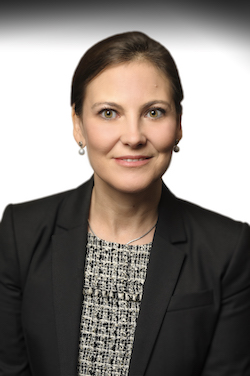
Teresa Palomero

Teresa Palomero, PhD

Dr. Palomero is a Professor of Pathology and Cell Biology at the Institute for Cancer Genetics at Columbia University Irving Medical Center (CUIMC).

She trained at the University of Oviedo (Spain) and completed postdoctoral fellowships at Harvard Medical School before joining Columbia in 2005, where she leads a research program dedicated to understanding, and ultimately treating, T-cell malignancies.

MoreLess

Over two decades, her lab has leveraged the power of next generation sequencing approaches to identify novel oncogenes and tumor suppressors in T-ALL (Van Vlierberghe et al. 2010) and peripheral T-cell lymphomas (da Silva Almeida et al. 2015), as well as drivers of resistance to chemotherapy in relapsed leukemias (Tzoneva, et al. 2013; Oshima et al. 2016). These genetic drivers of T-ALL and PTCL include RHOA G17V, VAV1 fusions, and PHF6 mutations, and they underpin some of the field’s first mouse models of angioimmunoblastic T-cell lymphoma.

Her current research focuses on the elucidation of the oncogenic mechanisms driven by these genetic alterations, the development of genetically manipulated mouse models of T-cell lymphoma and the therapeutic targeting of key oncogenic pathways responsible for T-cell transformation. Her work is funded by the NIH and Blood Cancer United, and she serves as a Scientific Editor for Blood Cancer Discovery. Dr. Palomero also serves as Director of Graduate Studies for the Cancer Biology track of Columbia’s VIPRE graduate program and Course Director of Cancer Biology I, reflecting a long-standing commitment to mentoring early-career scientists.

Postdoctoral Fellows
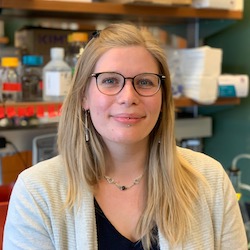
Anouchka Laurent

Anouchka Laurent, PhD

Dr. Anouchka Laurent earned her Ph.D. in Oncogenesis from Gustave Roussy Institute and University Paris Diderot – Paris VII in France where she studied the genetic and molecular mechanisms of leukemia and lymphoma associated with gains of chromosome 21. She is currently an Associate Research Scientist in the Palomero Laboratory at Columbia University, where she investigates the mechanisms of transformation in peripheral T-cell lymphoma, with a particular focus on the role of the oncogenic regulator ID2 and its impact on chromatin regulation and tumor biology.
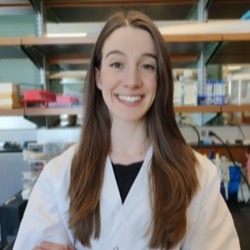
Laura Quevedo

Laura Quevedo, PhD

Dr. Laura Quevedo earned her Ph.D. in Molecular Biology and Biomedicine from the University of Cantabria under the mentorship of Dr. Ignacio Varela, where she studied genetic and functional intratumoral heterogeneity in pancreatic cancer. She is currently a postdoctoral fellow in the Palomero Laboratory at Columbia University, where she investigates the role of chromatin regulators in hematopoietic stem cell biology and T-cell acute lymphoblastic leukemia.
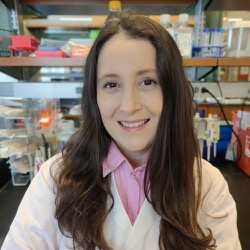
Ruth Alonso Alonso

Ruth Alonso Alonso, PhD

Dr. Alonso is a postdoctoral fellow working on PTCL in the Palomero Lab

Research Staff

Ryan D. Najac

Ryan D. Najac, BA

Ryan earned his B.A. in Computer Science from Columbia University while working in the lab. He is now a Senior Technician, providing support across multi-omic experiments from cell culture to data analysis, and manages the lab’s biobanked sample collection and sequencing data.

Past Members

Clara Reglero Gomez

Clara Reglero Gomez, PhD

Dr. Reglero Gomez was a postdoctoral fellow who worked on PTCL in the Palomero Lab
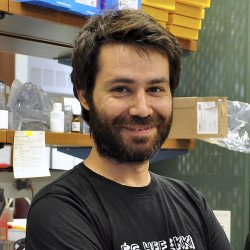
Jose Rodriguez Cortes

Jose Rodriguez Cortes, PhD

Dr. Cortes was a postdoctoral fellow who worked on PTCL in the Palomero Lab
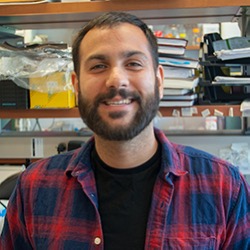
Robert Albero Gallego

Robert Albero Gallego, PhD

Dr. Albero Gallego was a computational postdoctoral fellow in the Palomero Lab
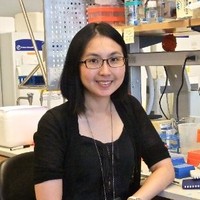
Wen-Hsuan Lin

Wen-Hsuan Lin, MD, PhD

Dr. Wen-Hsuan Lin was a hematopathologist and physician-scientist in the Department of Pathology and Cell Biology who worked on PTCL in the Palomero Lab
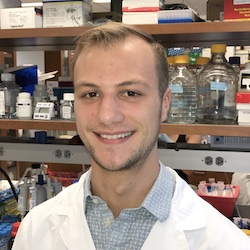
Adam Mackey

Adam Mackey, BS

Adam was the lab manager and a research technician
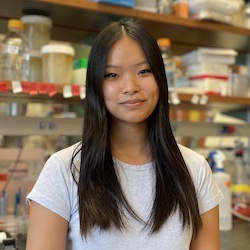
Cindy Ma

Cindy Ma, MPH

Cindy was a research technician
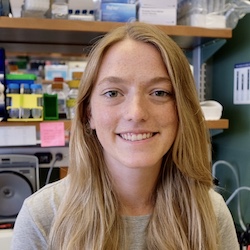
Hannah Miller

Hannah Miller, BS

Hannah was the Palomero lab manager and a research technician

Bobby Shih

Bobby Shih, PhD

Bobby Shih received his PhD from the Integrated Cellular, Molecular and Biomedical Studies Program at Columbia University working on PTCL in the Palomero Lab

Christine Moon

Christine Moon, PhD

Dr. Moon was an MSTP student in the Palomero Group

Kalay Bertulfo

Kalay Bertulfo, PhD

Kalay completed their PhD while working on PTCL in the Palomero Lab
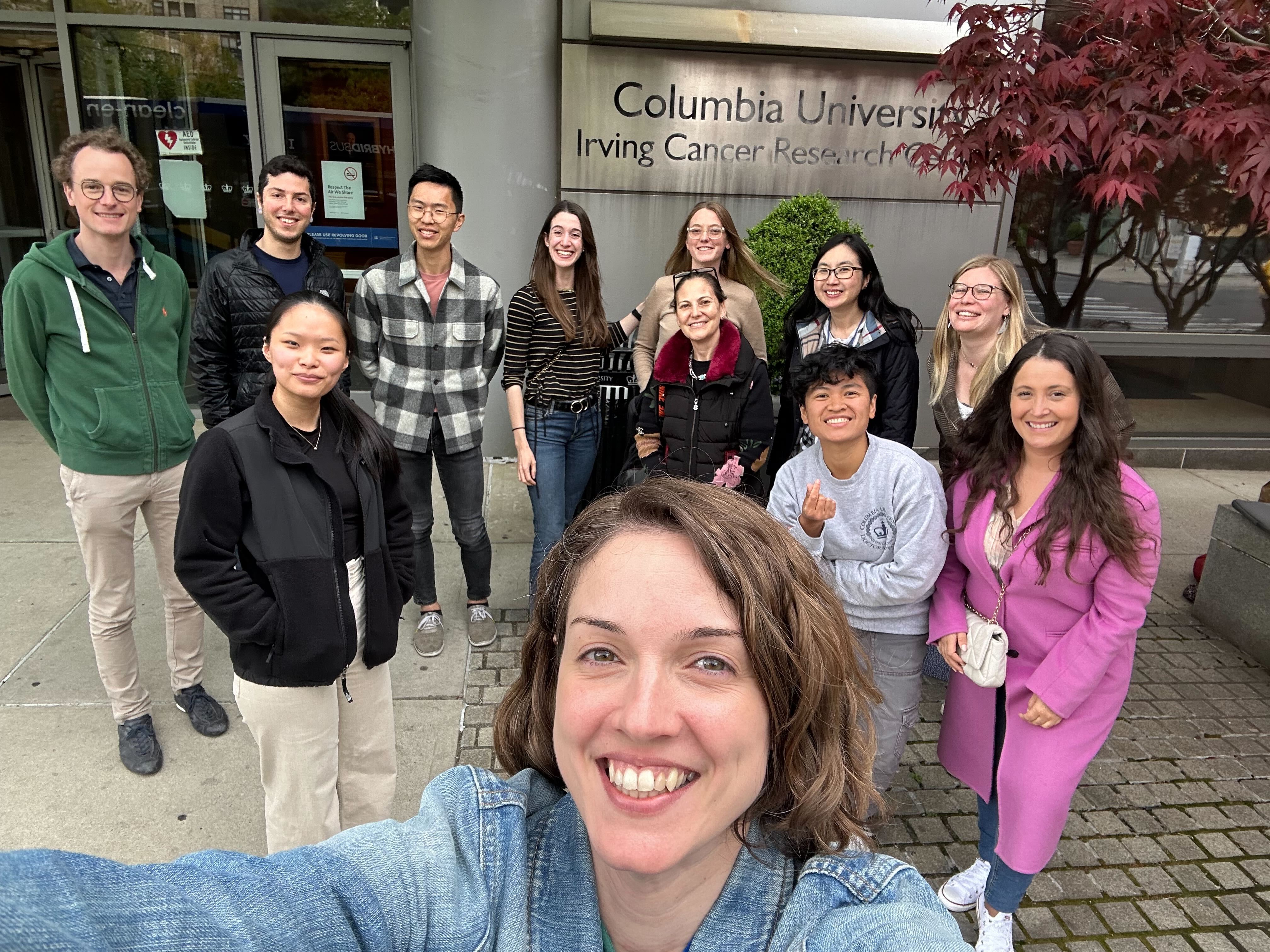
View our roster

Recent Publications

For a complete list of publications, please visit PubMed

Join Us!

Postdoctoral Fellows We welcome inquiries from postdoctoral candidates interested in cancer genomics, epigenetics, mouse models, or single-cell and computational approaches to T-cell malignancies. Current projects span PHF6 biology, VAV1 signaling, tumor microenvironment analysis, and AI-based regulatory network modeling.

Students & Rotations PhD rotation students, master’s students, and undergraduate researchers are welcome to reach out about joining the lab for a rotation, thesis project, or research experience alongside our current team.

Stable, continuous funding. The lab’s research is supported by active NIH R01 and U01 grants (NIH/NCI, NIH/NIA) and foundation awards from Blood Cancer United, providing a well-resourced environment to build your own project.

Email Dr. Palomero →

Group Photo

Contact Us

Our laboratory is on the 6th floor of the Irving Cancer Research Center building, located between 166th and 167th streets on Saint Nicholas Ave., just across from the NYP Adult Emergency main entrance. Subway lines 1 or A C to the 168th Street Station.


Irving Cancer Research Center
Columbia University Irving Medical Center
1130 Saint Nicholas Ave, Room 607
New York, NY 10032

Phone: (212) 851-5292